
These are some of my earliest memories, in no particular order.
It is my third or fourth birthday. It is morning. I have just arrived at daycare. I tell the caregiver that it is my birthday, and if there are to be cupcakes after lunch then she had better get started on them right away.
My older sister is on a local pre-school television program. There is a black and white console set in our living room, and we are watching my sister on it.
I have been put to bed in my sister’s room to take a nap. I am not tired. I don’t like it. I stare at the ceiling. Obviously I have been bothering someone.
My mother takes me to Hesterman Bowl for her league games. I am deposited in the childcare area. There is a plastic toy steam locomotive. It is large enough that I can sit on it. We have the exact same locomotive at home.
I want to play “Bozo’s Circus” with my mother. After some pestering she finally acquiesces. We play the Grand Prize Game. Maybe we do a sketch. Then it’s time for the Grand March and I ask mom to play a song on the organ (she has a Hammond organ). She plays something wholly inappropriate like “Moonlight in Vermont” and I am very disappointed with her.
One of my favorite books is a giant book of planes, trains, and all kinds of motor vehicles. It has no page numbers, so I add them. After page 100, I write 1001 (one hundred and one), 1002, etc.
I am curious about my urine and I decide to collect it, to see how much there is over some time. I use an old coffee can, and put it under a step stool in the bathroom. By midday my mother has discovered it. When confronted about it, of course I have absolutely no idea how it got there.
Our furnace is in a closet with two sliding doors. There are two notches for your fingers on either door. The notches are almost exactly the size of a penny. My sister and I enjoy putting a penny in one of the notches and then taking it back out. Then one time I cannot get my penny out. I am devastated. When we visited the house about 25 years later, the penny was still there.
It is the end of one of the last Apollo missions, probably the final one. I am watching the splashdown and recovery on the color (!) Motorola console TV in the family room. The command module has a couple of spherical things on the top, and they look like Mickey Mouse ears to me.
15 April 2020

17 November 2019
Biographies
I am slowly working my way through Music Listography.
The next list is of my favorite musical artist biographies. Upon encountering this challenge, I had read 16 of these, so I had to read four more to round out the list. The first 16 were all autobiographies. Having enjoyed those, I saw no need to change things up. Most of these are soup-to-nuts biographies, while some are more episodic. In alphabetical order:
1. David Byrne, Bicycle Diaries
Byrne writes about a period of post-Heads touring. He makes an effort to get to know the cities he’s visiting by riding around on his folding bicycle.
2. David Byrne, How Music Works
This volume has a long chapter about Byrne’s musical experiences throughout his career, but there’s so much more here. He writes about how technology and performance spaces shape the music played through them. He also opines on the changing economic landscape of the music business.
3. Elvis Costello, Unfaithful Music & Disappearing Ink
Enormous. Soulful. Poetic. Costello is born into a life of music, and it pervades every aspect of his life.
4. Miles Davis, Miles
This is the mother of all musician biographies. Everything in Davis’ life is a motherfucker, good or bad. Not for the faint of heart.
5. Thomas Dolby, The Speed Of Sound
As a fan and a techie, I thoroughly enjoyed this. I hadn’t known that, after withdrawing from the pop music scene in the late 80’s, he became a Silicon Valley tech executive. Hilarious story about visiting Michael Jackson’s house in the early 80’s.
6. Flea, Acid For The Children
This book traces Flea’s childhood through the foundation of the Red Hot Chili Peppers when he was 20. Lots of drugs and petty crimes, which are thankfully foreign to me, but also so much to relate to — discovering music and its emotional release; finding spirituality in nature; overcoming shyness and being the runt of the class at school.
7. Herbie Hancock, Possibilities
Starts off with the best anecdote about a concert with the Miles Davis quintet. The theme of radical acceptance is established early on, and prevails throughout his story.
8. Fred Hersch, Good Things Happen Slowly
Remarkable account of the foundation of Hersch’s career as a gay jazz musician at a time when it was especially difficult. Equally remarkable is how he copes with HIV and recovers from a coma. The dream he has about Thelonious Monk is both frightening and hysterical.
9. Tony Levin, Beyond The Bass Clef
This is a jump-around collection of entries from Levin’s groundbreaking blog. Fascinating tales of recording and touring with some of the (other) great musicians of our time. Caffeine and bicycling do not mix.
10. Johnny Marr, Set The Boy Free
I was surprised to learn how Marr was the de facto business manager for The Smiths through their meteoric existence, largely while still a teenager. I enjoyed reading how he and Morrissey wrote together, and how similar it was to Richards and Jagger. Also fascinating how he started running, kind of like Forrest Gump.
11. Moby, Porcelain
Moby’s first memoir is one of my favorites. It covers the early part of his career, up to the creation of Play but before its unlikely success. Much poverty. Brutal honesty. Fantastic imagery. Impossible cameos. I exclaimed “No Way!” out loud several times as I read.
12. Moby, Then It Fell Apart
This is both a prequel and sequel to Porcelain. It shifts back and forth between Moby’s childhood (“a poor kid in a rich town”) and coping (not well) with success after the release of Play. Lots of alcohol and other bacchanalia, but ultimately coming to terms with it all.
13. John Pizzarelli, World On A String
Pizzarelli is another musician by birth, son of the great Bucky Pizzarelli. There are great stories here of touring with his dad, creating a career for himself, and working with so many other greats along the way.
14. Questlove, Mo’ Meta Blues
I picked this up at the airport and read at least half of it on a trans-Atlantic flight when I should have been sleeping. As with Costello, Questlove is born into music. Soul Train is the calendar of his life. The cast of characters he meets in high school in Philadelphia is amazing.
15. Keith Richards, Life
I heard this one was good, and I wasn’t sure what to expect. I enjoyed it a lot more than I thought I would. Richards is an eloquent writer, far more so than one might expect from his oft-caricatured persona. Lots of drugs and near-death experiences. I have a new appreciation for much of the Stones’ catalog.
16. Nile Rodgers, Le Freak
Rodgers’ story is easily one of my favorites. A unique childhood, with junkie parents, he learned to fend for himself quite early. At seven (!) he would skip school and go to the movies. Like Richards and Flea, Rodgers could easily have died several times over. He persevered through career setbacks and is now a cancer survivor. Along the way he worked with so many other great musicians and helped to shape the sound of popular music.
17. Georg Solti, Memoirs
I enjoyed the early, more human part of Solti’s story, of growing up in Budapest and escaping fascism at the onset of WWII. The latter part was less interesting to me, essentially a list of operas and other works he conducted.
18. Bruce Springsteen, Born To Run
There were many surprises for me in Springsteen’s book. For a man whose songs often invoke cars, he learned to drive rather late. He was more or less abandoned by his parents just after high school. He avoided drugs entirely and drinking for a long time. He is very introspective, and an advocate of psychotherapy.
19. Sting, Broken Music
Sting recalls his childhood and early adulthood through the foundation of the Police. Cold mornings delivering milk as a boy in Wallsend. He was not at all good at math in school.
20. Ben Watt, Patient
This is a frighteningly honest account of the months Watt spent in a hospital battling a life threatening illness. Intense images of the cadence of life in his ward during his recovery. Ultimately uplifting, but quite a trip to get there.
14 August 2018
Music Videos
Now it's time for some of my all-time favorite music videos.
- Art Of Noise "Close To The Edit"
- Band Aid "Do They Know It's Christmas"
- David Bowie "Ashes To Ashes"
- Field Music "In Context"
- Herbie Hancock "Rockit"
- INXS "Kiss The Dirt"
- Jill Scott "A Long Walk"
- Joeski Love "Pee Wee's Dance"
- Lusine "Two Dots"
- Madness "Our House"
- Peter Gabriel "Sledgehammer"
- Royksopp "Eple"
- Sade "Nothing Can Come Between Us"
- The Sea And Cake "Harps"
- Talking Heads "Once In A Lifetime"
- Tears For Fears "Everybody Wants To Rule The World"
- They Might Be Giants "Don't Let's Start"
- Tom Tom Club "Genius Of Love"
- Tycho "Horizon"
- U2 "Pride (at Slane Castle)"
12 August 2018
Fashion Icons
The next list is of my "fashion icons" from the music world. I am about as fashionable as a tuna sandwich, so I'm interpreting this topic loosely, and that will be evident by some of my choices.
- Adrian Belew

- David Bowie

- David Byrne

- Elvis Costello

- Paul Denman

- Edge

- Kurt Elling

- Scott Hansen

- Roy Hargrove

- Nick Heyward

- Lyle Lovett

- Miles Davis

- Moby

- Thelonius Monk (left, with Howard McGhee, Roy Eldridge, and Teddy Hill)

- Morrissey

- Rick Nielsen

- John Pizzarelli

- Questlove

- Paul Simonon (right, with Mick Jones)

- Sting


02 August 2018
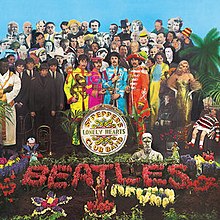

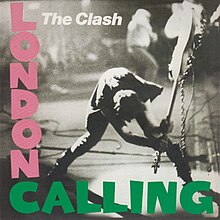


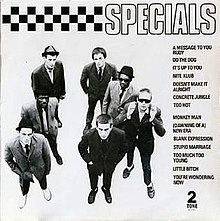
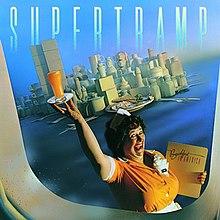


01 August 2018
Music Biopics And Documentaries
Here are some of my favorite music biopics and documentaries.
- 808
- Beethoven Lives Upstairs
- Bird
- Chasing Trane
- Gigantic - A Tale Of Two Johns
- The Glenn Miller Story
- The Hitmaker
- I Am Trying To Break Your Heart
- If It Ain't Stiff
- Jaco
- Jazz on a Summer's Day
- Ken Burns' Jazz
- Mister Dynamite
- Once
- The Pianist
- Rattle And Hum
- Ray
- Shut Up And Play The Hits
- Standing in the Shadows of Motown
- The Sun Came Out
03 March 2013
How Music Works
Cough, cough, it's a little dusty in here...
I saw David Byrne's How Music Works in my Amazon recommendations before last Christmas, just in time to get it on my wish list. And Santa came through! I didn't know exactly what to expect. All I knew was David Byrne, and How Music Works, and that's enough for me. Had to have it.
Fantastic book. This is Byrne writing about music from a variety of perspectives. Parts of it are autobiographical but not all. There are engaging, high-level descriptions of the creative process behind many of his works, both with Talking Heads and as a solo artist and collaborator. There are histories of performing venues and of music-related technologies, and how they affected the music produced in/with them. There is a compelling case for amateur musicianship that has encouraged me to keep making music, however awful I may be at it. There is a sobering discussion of how one makes money (if any) in the music business today, and the pros and cons of both the changing role of record labels and of the democratizing effects of the Internet on music distribution.
Like other Byrne I've read, there is no over-arching thread or narrative. It is a collection of essays that one could read in any order and enjoy just as well. It is written largely in a conversational style in which you can clearly hear Byrne speaking to you, the reader. He is characteristically witty, funny, and insightful. For someone interested in all aspects of modern music, and especially for any fan of the music of Byrne and of Talking Heads, I can strongly recommend it.
Subscribe to:
Posts (Atom)
